
From medieval queens and mighty kings to Renaissance châteaux, Romanesque churches and the fascinating story of Cognac – discover the remarkable history of the region surrounding Le Mas des Fleurs.
The countryside around Ruffec might appear peaceful and timeless today, but look a little closer and you'll discover a region steeped in history.
For centuries, this part of western France sat at the crossroads of kingdoms, cultures and conflicts. Roman settlements, medieval monasteries, powerful noble families and royal dynasties have all left their mark on the landscape.
It is a region that has witnessed battles between the French and English, been home to one of the most influential women of the Middle Ages, and given the world both a French king and one of its most celebrated spirits.
From the historic streets of Poitiers to the elegant town of Cognac, there is an extraordinary amount to discover.
So, if you enjoy history, architecture and a little storytelling along the way, here are some of the places we'd recommend exploring during your stay.
1. Poitiers – The city of a hundred bell towers

Approximately 1 hour from Ruffec.
Few towns in western France have a history quite as fascinating as Poitiers.
With origins dating back more than 2,000 years, Poitiers was an important settlement of the Gallic Pictones tribe before becoming a significant Roman administrative and commercial centre. Known as Limonum during the Roman period, it occupied an important position on the ancient road network connecting the region with the rest of Roman Gaul.
Today, its historic centre is a wonderful place to explore on foot, with medieval streets, timber-framed houses, magnificent churches and elegant townhouses.
Eleanor of Aquitaine – A queen ahead of her time
Perhaps the most fascinating historical figure associated with Poitiers is Eleanor of Aquitaine (Aliénor d'Aquitaine).
Born around 1122, Eleanor inherited the vast Duchy of Aquitaine and became one of the most powerful women in medieval Europe.
She first married Louis VII of France, becoming Queen of France. Following the annulment of their marriage, she married Henry Plantagenet, who later became Henry II of England. She was therefore Queen of England as well as Duchess of Aquitaine.
Her sons included two particularly famous English kings: Richard the Lionheart and King John.
Eleanor maintained a court at Poitiers, where literature, music and the traditions of the troubadours flourished. Her influence extended across France and England, and her story remains central to the history of medieval Europe.
What to see in Poitiers
Notre-Dame-la-Grande: One of France's finest examples of Romanesque architecture. Its intricately sculpted façade is particularly beautiful.
Baptistère Saint-Jean: Dating from Late Antiquity, this is one of the oldest surviving Christian buildings in France.
Palais des Comtes de Poitou: A magnificent medieval building associated with the Dukes of Aquitaine and Eleanor's court.
Cathédrale Saint-Pierre: An impressive Gothic cathedral commissioned in the 12th century.
Musée Sainte-Croix: A fascinating museum covering archaeology, fine art and regional history.
One particularly interesting fact: Poitiers is often associated with two famous medieval battles. The Battle of Tours/Poitiers in 732, traditionally linked to Charles Martel's victory over an Umayyad army, and the Battle of Poitiers in 1356, during the Hundred Years' War. The latter resulted in the capture of the French king, Jean II.
The two battles are separated by more than six centuries, but both became significant episodes in European history.
Our recommendation: Allow a full day to explore Poitiers. Its historic centre is best discovered slowly, with plenty of time for a leisurely lunch.
2. Angoulême – Roman origins, medieval power and Renaissance elegance
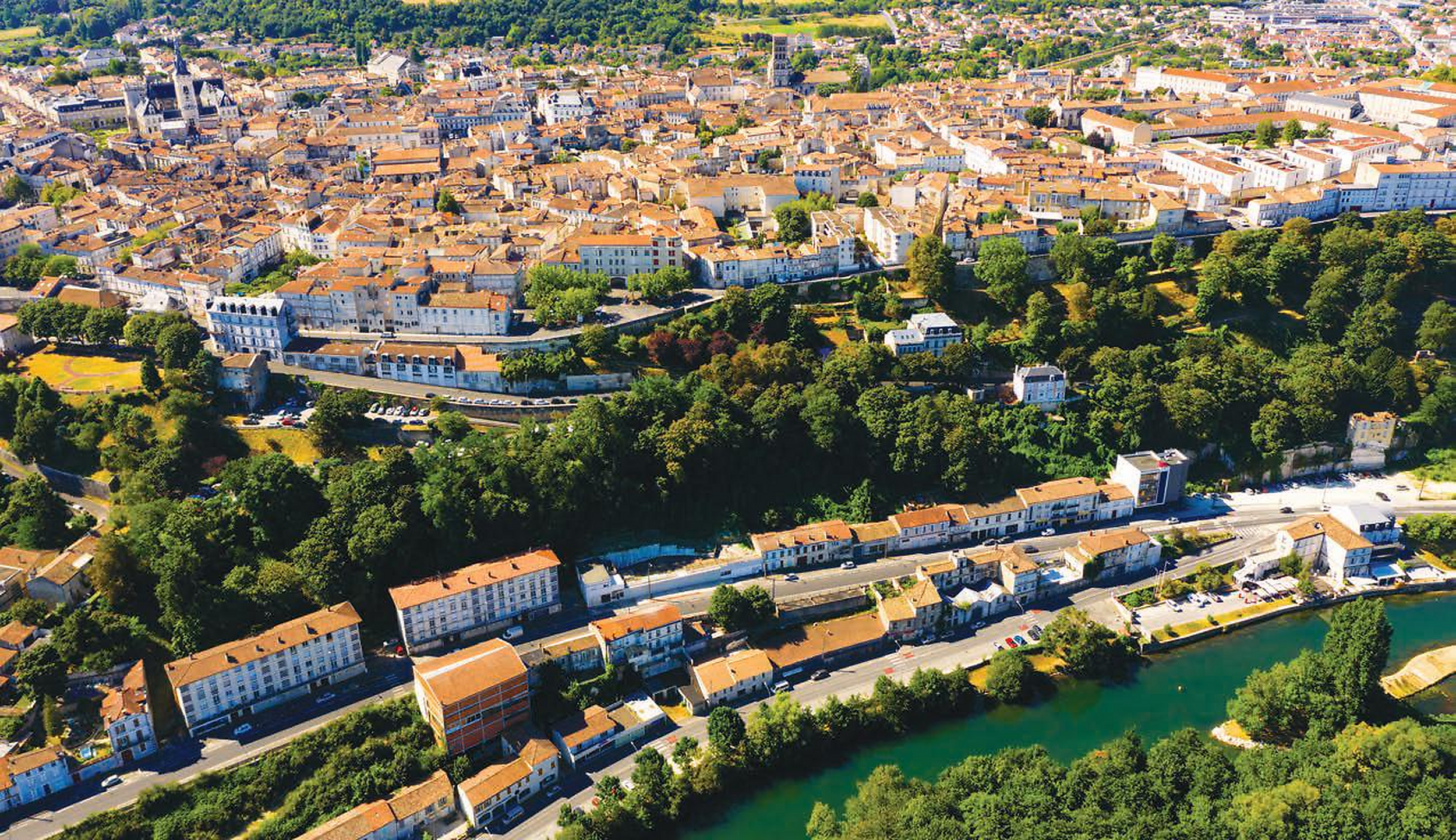
Approximately 45–55 minutes from Ruffec.
Perched on a limestone plateau overlooking the Charente valley, Angoulême has one of the most impressive historic settings in the region.
Its origins go back to the Roman settlement of Iculisma, and its elevated position made it strategically important for centuries.
During the Middle Ages, Angoulême became the centre of an important county, ruled by powerful noble families. Its position between French and English territories meant that it was frequently caught up in the political and military struggles of the period.
A city of kings and queens
One of Angoulême's most interesting historical connections is with the Valois dynasty.
Marguerite d'Angoulême, born here in 1492, was the sister of François I and later became Queen of Navarre. She was also a celebrated writer and patron of the arts, best known for her literary work L'Heptaméron.
Her brother, François I, became one of France's most famous Renaissance monarchs. A great patron of art and architecture, he played an important role in bringing Italian Renaissance influences into France.
What to see in Angoulême
Cathédrale Saint-Pierre: A remarkable Romanesque cathedral, consecrated in 1128, famous for its sculpted façade.
The historic ramparts: Walk along the old city walls for wonderful views across the Charente valley.
Hôtel de Ville: Housed in the former Château des Comtes d'Angoulême, it incorporates surviving medieval towers.
Musée d'Angoulême: A fascinating collection of archaeology, art and historical objects.
The old town: Explore its narrow streets, historic houses and elegant squares.
From medieval manuscripts to modern comics
Angoulême has another rather unusual claim to fame: it is internationally recognised as a centre for comic-book art.
The International Comics Festival began here in 1974, transforming the city's cultural identity. Today, visitors can discover giant painted comic-book murals throughout the streets, alongside the Cité Internationale de la Bande Dessinée et de l'Image.
It's an interesting contrast between the city's medieval past and its modern creative identity.
Our recommendation: Combine a morning exploring the historic centre with lunch in one of the old town's restaurants, followed by a walk along the ramparts.
3. Cognac – The birthplace of a king and the home of a world-famous spirit
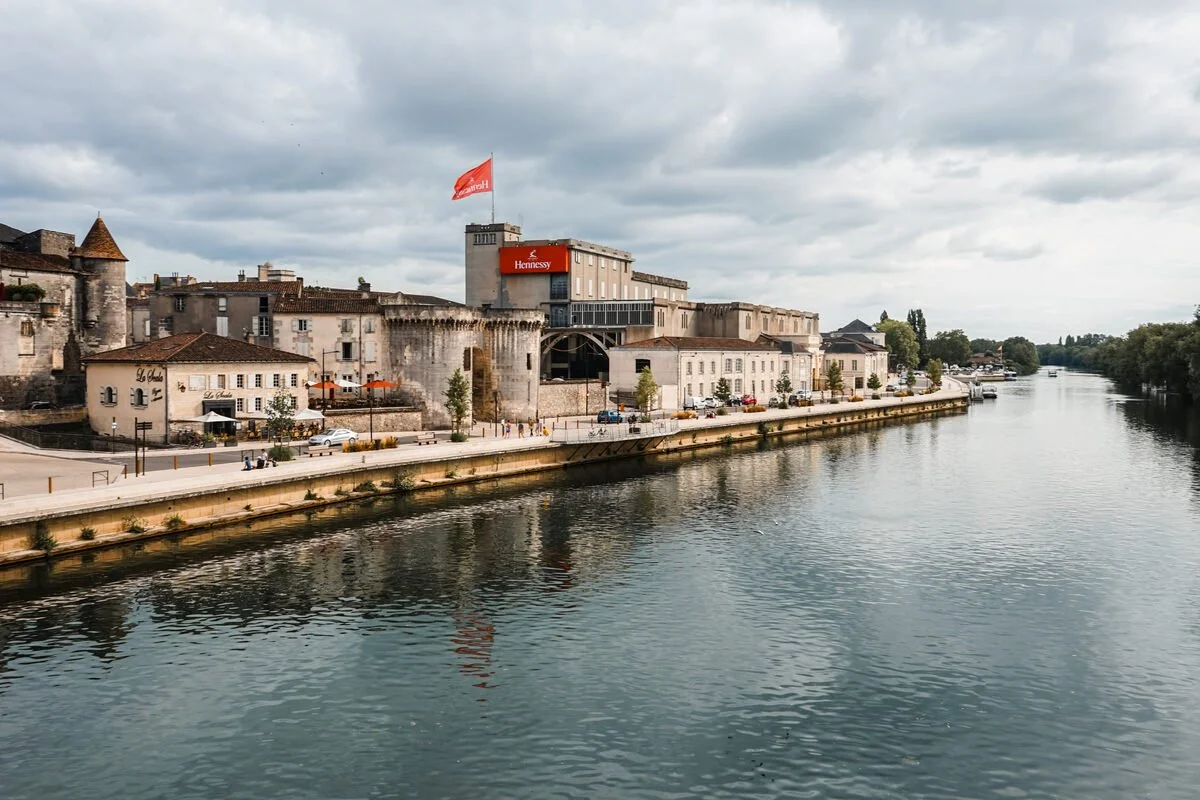
Approximately 1 hour 10–20 minutes from Ruffec.
Cognac is perhaps best known internationally for its famous brandy, but the town has a fascinating history that goes well beyond its vineyards and distilleries.
Situated on the banks of the Charente, Cognac developed as an important trading settlement during the Middle Ages. Its river provided a vital route for transporting goods, connecting inland producers with merchants and ports further west.
François I – Born in Cognac
One of the town's most famous historical associations is with King François I, who was born at the Château de Cognac in 1494.
He became King of France in 1515 and ruled until his death in 1547.
François I is remembered as a great Renaissance monarch, patron of the arts and supporter of artists including Leonardo da Vinci, whom he invited to France.
His reign saw the development of magnificent Renaissance architecture, including the celebrated Château de Chambord.
The Château de Cognac itself has origins dating back to the 10th century. It was transformed into a royal residence during the 15th and early 16th centuries, with François I contributing to its development.
Today, it is possible to visit the château and discover both its royal history and its later connection with Cognac production.
How Cognac became famous
The history of Cognac as a spirit began with the region's wine trade.
During the 15th and 16th centuries, Dutch merchants regularly travelled to the Charente region to buy wine. However, transporting wine over long distances was difficult, as it could deteriorate during the journey.
Distillation offered a solution.
The wine was transformed into a concentrated spirit, initially known as brandwijn by Dutch traders. Over time, the French developed the technique of double distillation in traditional copper stills, and discovered that ageing the spirit in oak barrels improved its character.
By the 18th century, Cognac had become an increasingly important international trading centre.
Some of the great Cognac houses were established during this period, including:
Martell – 1715
Rémy Martin – 1724
Delamain – 1759
Hennessy – 1765
Otard – 1795
Interestingly, several of these historic houses have strong connections with British and Irish merchants who helped establish the international Cognac trade.
The industry was later devastated by the phylloxera epidemic of the late 19th century, which destroyed much of the region's vineyards. The vineyards were gradually replanted, and the industry recovered.
In 1936, Cognac received its Appellation d'Origine Contrôlée status, protecting its geographical origin and production methods.
What to see in Cognac
Château de Cognac: Discover the birthplace of François I and the town's royal history.
Musée des savoir-faire du Cognac: Explore the history, craftsmanship and production of Cognac.
Historic Cognac houses: Several major houses offer guided visits and tastings.
The old town: Wander through the historic streets, admire the traditional architecture and enjoy the riverside setting.
The Charente riverfront: A lovely place for a walk, with views of the historic buildings and river.
Our recommendation: Make a day of it. Explore the historic centre in the morning, enjoy lunch beside the river and book an afternoon visit to one of the Cognac houses.
4. Ruffec – More history than you might imagine
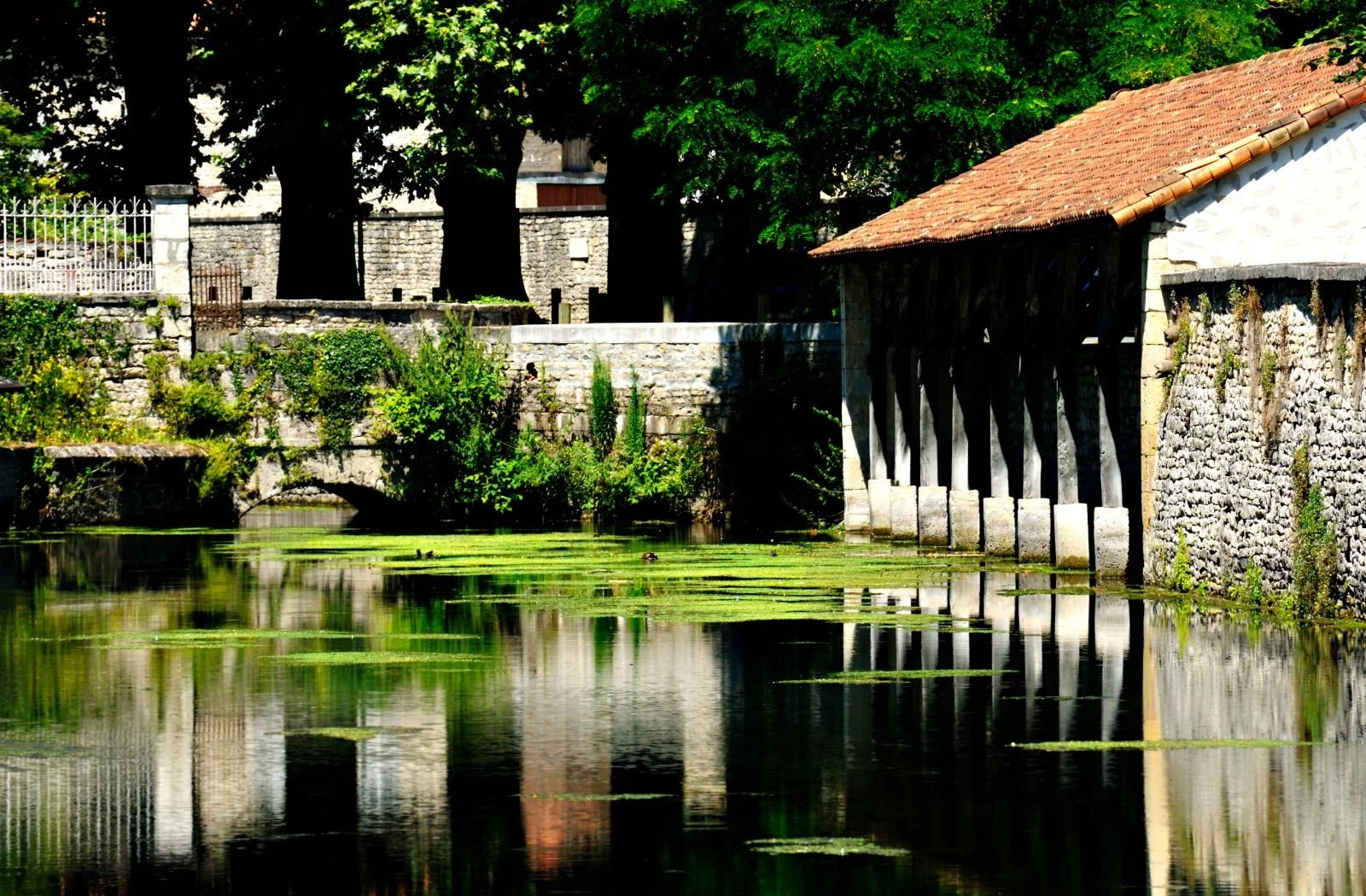
Right on your doorstep!
While visitors often head straight for the larger towns, it is worth remembering that Ruffec itself has a fascinating history.
According to the town's historical records, Ruffec's origins date back to 963, during the reign of King Lothaire.
The settlement developed around a fortified castle and an important church, with the wealthy Benedictine Abbey of Nanteuil playing a significant role in its early development.
Its position on the threshold of Poitou made Ruffec an important stopping point for travellers and traders.
A royal visit – and a rather unfortunate boating incident!
One particularly interesting episode took place at Easter 1443, when King Charles VII and his son, the future Louis XI, visited Ruffec.
During a boating excursion on the Charente, the young dauphin apparently came close to losing his life!
It's a lovely little piece of local history and a reminder that even medieval royal visits didn't always go entirely to plan.
The Church of Saint-André
The Église Saint-André is one of Ruffec's most recognisable landmarks.
Originally a Romanesque church, much of the building was destroyed by fire in the mid-17th century and subsequently rebuilt in the Gothic style. Its surviving Romanesque façade is particularly interesting and contains some intriguing sculptural details.
Ruffec during the Second World War
Ruffec also played a role during the Second World War.
The town and surrounding area became an important centre of Resistance activity, helping Allied airmen escape occupied France and make their way towards Spain.
It is a fascinating and often overlooked chapter in the history of this part of the Charente.
Our recommendation: Spend some time exploring Ruffec itself. Its historic centre, church and traditional streets are well worth a visit, particularly when combined with a trip to the local market.
5. Nanteuil-en-Vallée – The legacy of a medieval abbey
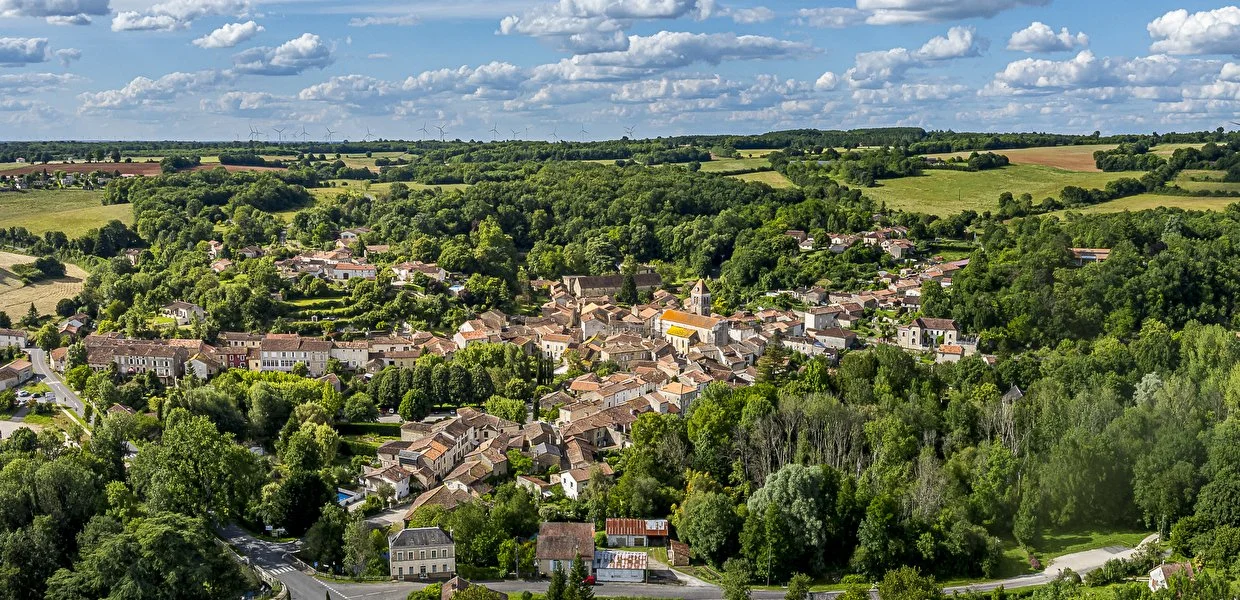
Approximately 20–25 minutes from Ruffec
Just a short drive from Ruffec, Nanteuil-en-Vallée is one of the region's most historically interesting villages.
Its history is closely linked to the Benedictine abbey founded here in the early medieval period.
For centuries, the abbey was an important religious and economic institution, attracting pilgrims and supporting the surrounding community.
Although much of the original complex has disappeared, some remarkable remains survive, including the impressive Treasury Tower.
The village's historic architecture, peaceful gardens and beautiful riverside setting make it a wonderful place to explore.
A glimpse into medieval life
The Treasury Tower, or Tour du Trésor, is particularly impressive. Its Romanesque architecture offers a glimpse of the craftsmanship and wealth associated with the abbey.
The village also has traditional stone houses, old streets and gardens that make it a lovely place to spend an afternoon.
Our recommendation: Combine Nanteuil with nearby Verteuil-sur-Charente for a day discovering the medieval heritage of the Charente.
6. Verteuil-sur-Charente – A château with centuries of stories
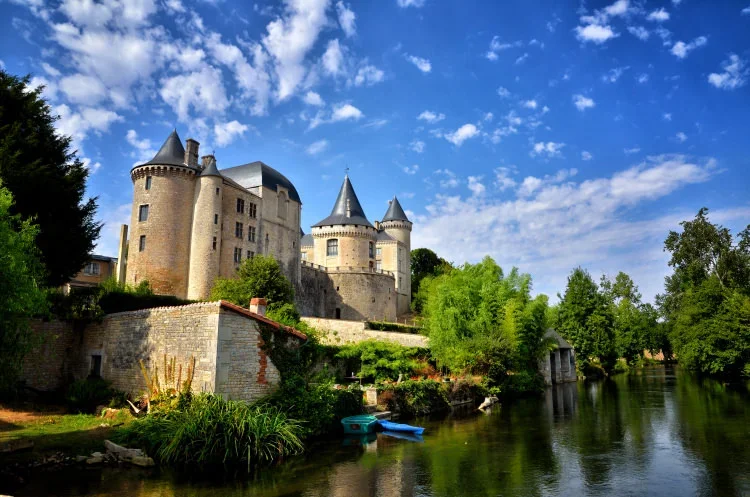
Approximately 10 minutes from Ruffec
It's difficult to talk about the history of this area without mentioning Verteuil-sur-Charente.
Its magnificent château dominates the village and has a history stretching back to the 11th century.
The château was associated with the powerful La Rochefoucauld family, one of France's most distinguished aristocratic families.
Over the centuries, it witnessed the changing fortunes of the region, including the conflicts between French and English interests during the Hundred Years' War.
The village itself grew around the château and the river, developing into a charming settlement of traditional stone buildings, narrow streets and beautiful riverside views.
Today, Verteuil is one of the most picturesque villages in the area and a wonderful place to experience the architectural heritage of rural France.
Our recommendation: Take a stroll along the river, admire the château from the bridges and enjoy a leisurely lunch in the village.
7. The Hundred Years' War – Why this region mattered so much
It is impossible to explore the history of the Charente and Poitou without understanding the importance of the Hundred Years' War.
Fought intermittently between England and France from 1337 to 1453, the conflict shaped much of western France.
The region was particularly significant because of its position between territories controlled by the English Crown and those loyal to the French monarchy.
The English kings held extensive lands in south-western France through their inheritance and marriage connections, while French kings sought to bring these territories back under their control.
The conflict left its mark on towns, villages, castles and churches throughout the region.
The Battle of Poitiers, 1356
One of the most famous events of the war took place near Poitiers in September 1356.
English forces, commanded by Edward, the Black Prince, defeated a considerably larger French army.
The French King Jean II, known as Jean le Bon, was captured along with many members of the French nobility.
His capture was a major political and financial disaster for France, and he was subsequently taken to England.
The event had enormous consequences for the French monarchy and helped shape the course of the war.
For anyone interested in medieval history, this part of France is particularly fascinating because so many of the places around us were directly affected by these events.
8. The Romanesque heritage of the Charente and Poitou
One of the most beautiful aspects of this region is its extraordinary collection of Romanesque churches.
Between the 10th and 12th centuries, churches and abbeys were constructed throughout western France, many of which survive today.
Their distinctive architectural style includes rounded arches, carved capitals, sculpted façades and impressive stone vaults.
Some of the most interesting examples can be found in Poitiers, Angoulême, Civray and the surrounding villages.
The Church of Saint-Nicolas in Civray, for example, is particularly famous for its richly sculpted Romanesque façade.
These buildings were not simply places of worship. They were also centres of education, community life and artistic expression.
For visitors interested in architecture, discovering these churches is a wonderful way to explore the region's medieval past.
A little history, a little culture and a lot of French charm
What makes this part of France so special is the way its history is woven into everyday life.
You can enjoy a coffee in a village square that has existed for hundreds of years, walk past a château once occupied by a noble family, explore a church built by medieval craftsmen or discover the birthplace of a Renaissance king.
And after a day of exploring, you can return to the peace and tranquillity of the French countryside.
Whether you are passionate about history, fascinated by architecture or simply enjoy discovering somewhere new, the region around Le Mas des Fleurs offers an extraordinary amount to explore.
We look forward to welcoming you to Le Mas des Fleurs – and helping you discover a little of the history, culture and character of this beautiful corner of France.
Distances are approximate driving times from Ruffec. Opening arrangements and guided visits vary seasonally, so check ahead before travelling.
